

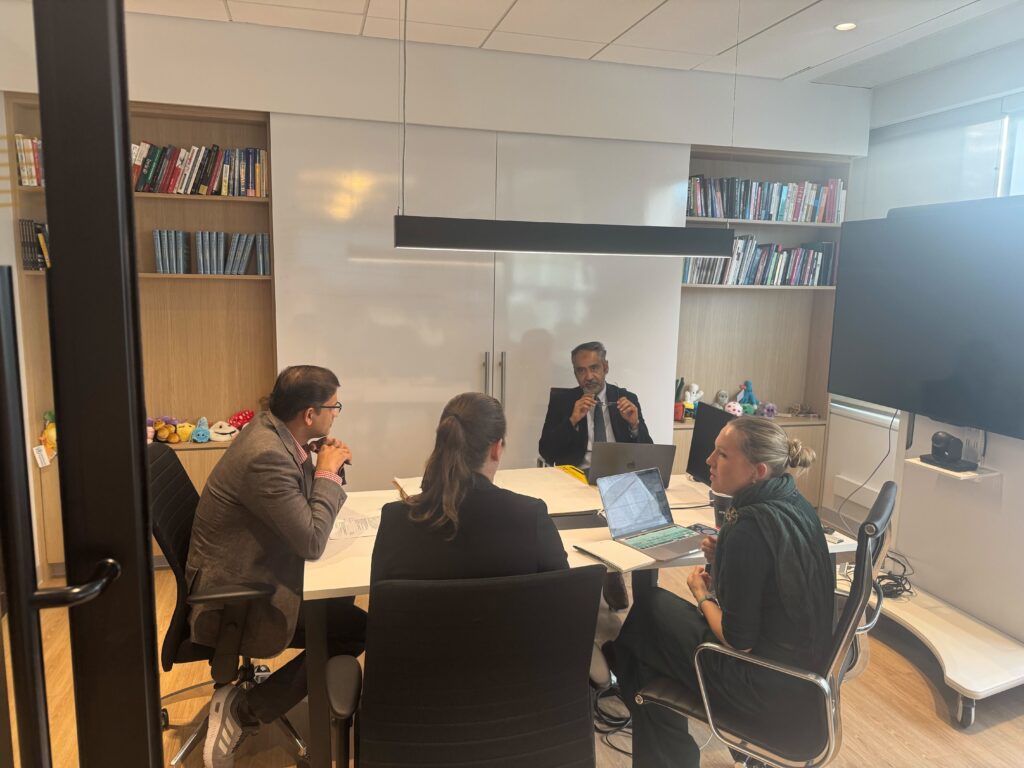
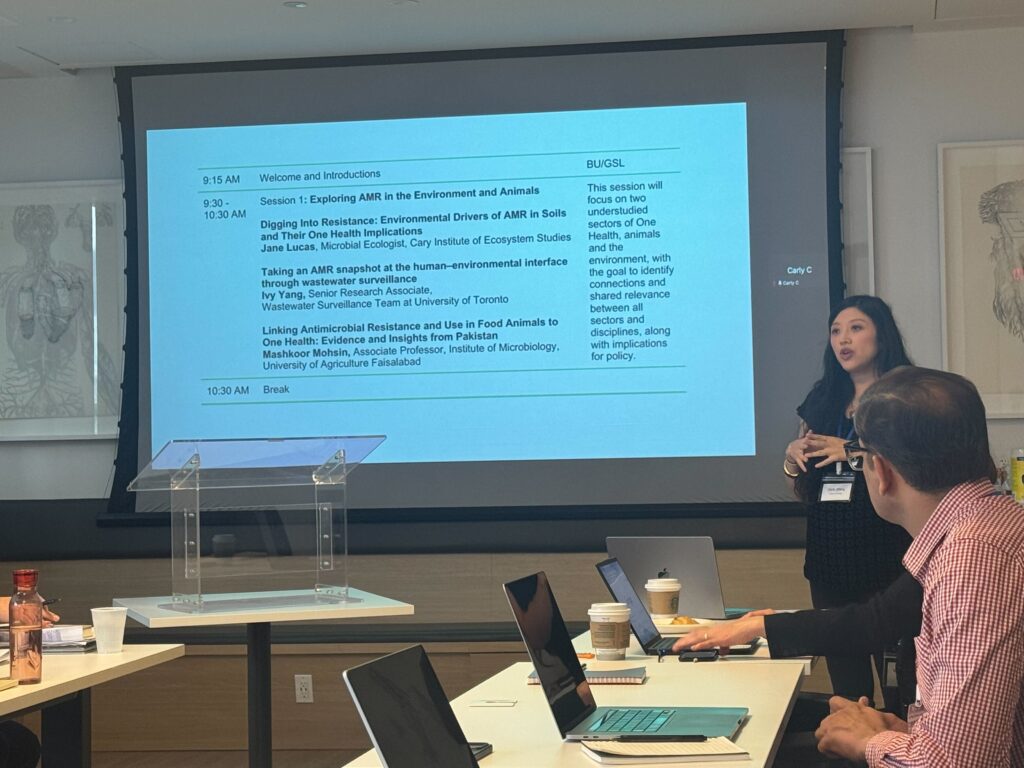
On November 8, the Global Strategy Lab hosted colleagues from Boston University for the Integrated One Health Research and Policy Workshop: Bridging Sectors and Disciplines. The event brought together researchers, practitioners, and stakeholders to discuss how One Health approaches can produce collaborative and sustainable solutions to antimicrobial resistance (AMR). The workshop highlighted the need to strengthen attention to understudied areas of One Health, especially the animal health and environmental sectors, where surveillance, infrastructure, and research remain uneven. Participants from the Global Strategy Lab included Arne Ruckert, Kayla Strong,
and Fiona Emdin.

This focus on underrepresented sectors is increasingly crucial as AMR continues to evolve across human, animal and environmental systems. Despite growing interest in the One Health approach, most AMR strategies still centre on human health, leaving critical environmental and animal dimensions underrepresented. This narrow focus also means we miss opportunities to improve surveillance, prevention, and stewardship across the interconnected systems that influence the development and movement of resistance.
Workshop Goals:
To advance these efforts, this workshop aimed to:
- Build a sustainable coalition committed to advancing One Health AMR research,
policy, and interventions. - Conduct stakeholder assessments of challenges and needs.
- Determine research priorities across disciplines and relevant policy applications.
- Develop a list of emerging research questions and strategies for One Health
priorities.
Participants discussed how AMR research can become policy and how to bridge divides between sectors. Discussions identified sustainable innovations to surveillance, improving triangulation of AMR and antimicrobial use data across humans, animals, and environments, as well as exploring community engagement and the sociocultural barriers to behaviour change.

Key takeaways from the event:
- AMR should be understood as a symptom and driver of global challenges, including inequities, consequences of conflict and climate-related challenges.
- Despite meeting frequently, certain groups and experts in the AMR space operate separately. Cross-sector and cross-discipline collaboration is required for a unified approach.
- Surveillance data requires interpretation and application improvements to turn policy into practice.
The workshop, convened under the SAFE AMR Partnership, marked a significant step forward in collaborations among researchers, policy researchers and practitioners working on AMR, underscoring the importance of a One Health approach to tackling AMR.
 Previous