


“It’s important to acknowledge that every state and actor cannot do the same thing. But we all share the responsibility to act and to collaborate.”
-Daniel Carelli
Across the New Conceptions miniseries, we’ve made the case that AMR must be addressed not only as a biomedical challenge but also as a social challenge. We’ve explored a series of conceptions that can reshape the global action plan revisions: antimicrobial resistance as socio-ecological dynamics, as infrastructure woven through daily life, and as a challenge shaped by urbanization, social inequities, and global systems.
In this episode of Unpacking AMR, Daniela Corno speaks with Dr. Laura Valtere and Dr. Daniel Carelli to unpack AMR as a collective action problem, a global challenge that cuts across human, animal, plant, and environmental health, and pulls in players from industry, academia, healthcare, and civil society. It’s a vast patchwork of actors, each with their own competing interests and limited incentives to cooperate across borders. Together they explore how resistance pays no attention to national borders, why national action plans often fall short of their promises, and what it might take to build the trust, capacity, and authority that real cooperation demands.
This is the fourth and final episode in our “New Conceptions to Manage AMR” miniseries, which has explored how social science can reframe the way we think about antimicrobial resistance and strengthen global action on AMR. It’s the last of the series, but not of the podcast! Stay tuned for more episodes of Unpacking AMR.
Listen to the other episodes:
Also listen on:


Guests

Dr. Laura Valtere is a postdoctoral fellow at the Centre for Advanced Studies in Bioscience Innovation Law (CeBIL) in the Faculty of Law at the University of Copenhagen. She holds a PhD from the Max Planck Institute for Innovation and Competition, and her research focuses on patent law and regulatory frameworks in biotechnology and pharmaceuticals, including the use of exclusivity as an incentive tool and, most recently, the role of intellectual property and regulation in combating antimicrobial resistance.
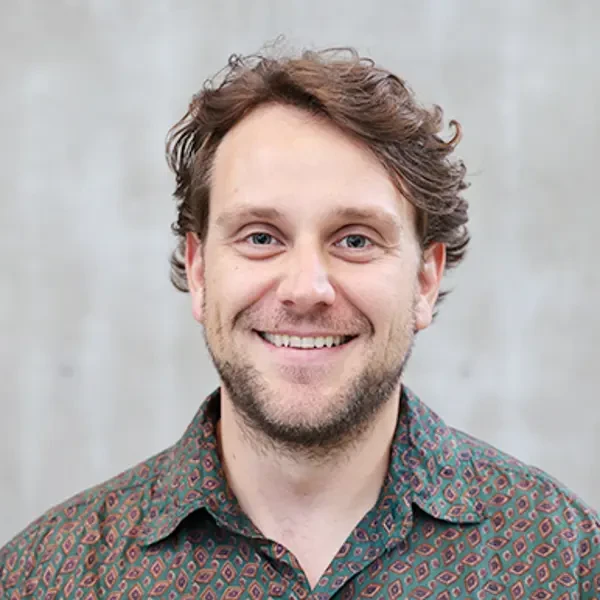
Dr. Daniel Carelli is a postdoctoral researcher at Chalmers University of Technology in Gothenburg, Sweden, and holds a PhD in political science from the University of Gothenburg. His research examines how contemporary states function and how they can be organized to tackle major global challenges such as climate change, pandemics, and antimicrobial resistance, with a particular interest in the role of bureaucratic institutions in these efforts.
Thank you to our behind-the-scenes crew for their support on this episode: Sofía Gutiérrez, Rosemary Vu, Kayla Strong, Daniela Corno and Demetria Tsoutouras.
Daniela Corno: Right now, fans across the world are cheering for their favourite FIFA World Cup team, and I can’t help but think of AMR as a football game. 11 of the best players in the world won’t win if they don’t pass, cover for each other, and trust their teammates to be where they’re needed. One player out of position and the whole move falls apart. Antimicrobial resistance can look a bit like that. Countries and sectors have to coordinate, playing their roles and sticking to shared rules to protect the effectiveness of antibiotics. But limited resources, competing interests, and unequal access make that cooperation difficult, and the consequences are global.
Daniela Corno: Welcome to another episode of Unpacking AMR, the podcast that unpacks the latest AMR policy research. My name is Daniela Corno and today we are bringing you our last episode of the New Conceptions of AMR miniseries. This series has explored how AMR is more than just a biomedical problem. It is also deeply interconnected with socio-ecological and structural issues. We’ve looked at how antimicrobials act as a kind of invisible infrastructure woven into our everyday systems. We’ve also explored the socio-ecological dynamics of AMR, or ways microbes in nature shape human lives through our daily activities, and the urban political ecologies, or how urbanization, the environment, and global health threats intersect and how these relationships influence AMR.
Today we turn to the last of these new conceptions: understanding AMR as a collective action problem. A global social challenge driven by different groups of people, each with their own competing interests and limited incentives to cooperate across borders.
I’ll be joined by Dr. Laura Valtere, postdoctoral fellow at the University of Copenhagen Centre for Advanced Studies in Bioscience Innovation Law, and Dr. Daniel Carelli, postdoctoral researcher at Chalmers University of Technology in Sweden. Together they’ll explore antimicrobial resistance through the lens of collective action and why solving it may be one of the hardest global governance challenges of our time.
You’ll often hear AMR described as a weakest link problem. It’s a common framing in this field, but what does it actually mean, and is it the most useful way to think about it?
Dr. Daniel Carelli: The framing of collective action, and the weakest link, is really capturing the outcome of AMR is something different from the driver of the AMR problem. Someone or some country has good reasons to take antibiotics, but the effects will come much later, and in different places. In addition to that, I think that the collective action problem talks a bit too much perhaps about the rational underpinnings of that weakest link problem, and under-emphasizes the different capacities that actors and institutions have across the globe.
Daniela Corno: Thinking about language, calling some countries the weakest link could sound like blame, as if the burden’s on them to simply try harder. So if AMR is a problem where the whole system is only as protected as its least resourced member, then the obvious next question is what happens there? When a country or health system simply isn’t able to act, where do the consequences land?
Dr. Laura Valtere: In instances where countries are unable to act, for example, due to limited infrastructure or weak regulation or insufficient funding, these regions can unintentionally become hotspots for the emergence and proliferation of resistant pathogens. As these pathogens do not respect national borders, these failures have a detrimental effect on the global effort to preserve antibiotic efficacy. And we can ask, what is the structural impact in this regard? The inability to act is not just a local tragedy, but a structural threat to the global community. Even if high income nations are rigorous in their stewardship, their populations are still vulnerable to resistant organisms imported from regions lacking the necessary infrastructure.
Dr. Daniel Carelli: Completely agree. And recently in Sweden, where I live, the government is now investing heavily in establishing a factory for producing antibiotics as a security strategy. It really cannot buy itself out from the problem. The core problem of AMR here, the weakest players or actors, they will face the greatest burden here and now, and in the short and mid-term future. So the consequences are greatest to them, but the consequences will also be great to other countries.
Daniela Corno: Resistance, in other words, doesn’t carry a passport. A gap in one place becomes a risk everywhere. And yet the tools we usually reach for, like stewardship programs, prescribing rules, and surveillance systems, were largely designed in well-resourced countries. So why do approaches that work well in one health system struggle to take root in another?
Dr. Daniel Carelli: Stewardship presupposes some basic level of infrastructure or institutional quality. In high income countries there may be resources, political commitment, surveillance systems, monitoring systems, regulatory agencies, whereas in many other countries, they lack precisely that. They cannot establish and uphold effective stewardship unless there is infrastructure and institutions backing that up.
Daniela Corno: Programs to use antimicrobials responsibly only work when a country already has a strong basic system in place. Things like funding, political support, surveillance, clear rules, and the people and agencies who make sure those rules are followed. When a country doesn’t have these supports, it’s very hard to build and sustain effective AMR programs. So, we need to focus not only on specific stewardship activities, but on building the basic systems that let those activities work in the first place.
Dr. Laura Valtere: Daniel mentioned probably two of the most important aspects, infrastructure and institutional structures. But as well, of course, this is about resources. And high-income countries probably possess much more resources to achieve goals more efficiently. But then there are also specific implementation barriers that are dependent on technology and availability.
Daniela Corno: For example, doctors need reliable testing to know what’s causing an infection and which medicine will work best against it. In many lower income countries, that testing can be missing, hard to access, or too slow. So, doctors are often left to make their best guess and prescribe broad spectrum antibiotics just in case.
Dr. Laura Valtere: Beyond the technical gaps, there are also often fundamental mismatches between the idealized stewardship model and the reality on the ground. This we especially see in our international meetings with colleagues from abroad. The word stewardship can be confusing or even culturally irrelevant in some regions because there are other competing health priorities, such as acute infection, disease outbreaks, or malnutrition, that are the major obstacles.
Daniela Corno: Actually, it comes back to foundations. You can’t run a stewardship program on infrastructure that isn’t there. Think of a team with no goalkeeper or players who’ve never trained together. It’s hard to run the game when the basics aren’t on the pitch. But here’s the twist. Even the best player in the world can’t win a tournament on their own. The results still depend on everyone else on their team. So, what happens when a country tries to solve AMR inside its own borders alone?
Dr. Daniel Carelli: Perhaps the most important question to raise when we talk about AMR governance. I’ve seen so many national action plans that mention some sort of global action or international collaboration. But it remains rather symbolic and without teeth. Resistance levels are increasing, in Sweden, in Europe, and globally. National action plans have been tested, and we have built up infrastructure in many places. But resistance levels continue to increase. We need to go back and think, okay, why is this and what can we do? And I’m convinced that we need a new sort of rethinking of national action plans and what the international dimension of this problem needs to be. And so, I think that we need to spend much more resources on international collaboration and global action. We need to create leadership and make that leadership function to a much greater extent than what we have today. I think that we need a new global system because without this new rethinking, I think that we are going to see an exponential growth in resistance levels.
Dr. Laura Valtere: From the global perspective or global view, I think that the domestic focus strategy fails to acknowledge the global nature of the AMR issue, which is a shared resource problem. Basically, the ability of pathogens, we know they evolve and spread across borders, and that makes national only policies ineffective. To give an example, focusing on national incentives for new antibiotic development without addressing the global access and excess crisis can lead actually to market failures. If new drugs are not accessible to the rest of the world, resistance will inevitably arise in these markets and eventually circulate back to nations that can afford new expensive treatments, basically nullifying the initial investment. And that’s why also we know that we have in Europe legislative developments providing various innovation incentives, but regional tools. Of course there will be spillovers also useful for the global community. But if there will not be equitable access tools for other regions, these innovative treatments, the consequences, will not be that prosperous unfortunately.
Daniela Corno: So, country focused strategies hit a wall. Microbes evolve and travel no matter where a policy stops. A new drug developed for one market eventually meets resistance imported from another and the investment quietly unravels. If the problem is shared, then so is the responsibility. But shared how and by whom? That’s where fairness enters the conversation.
Dr. Laura Valtere: I think that policymakers should approach antimicrobial resistance not as a purely technical biomedical challenge, but as a deeply social and ethical one, where fairness and burden sharing are central to success. Framing AMR through an equity lens requires shifting away from one size fits all stewardship models that can disproportionately penalize low-income countries while ignoring the historical and also systemic drivers of resistance.
Dr. Daniel Carelli: I think policymakers and researchers should think about AMR as an ethical problem, including several dimensions of fairness and burden sharing. We can start by saying that the wealthy parts of the world have enjoyed antibiotics for a longer time. We have greater resources in the wealthy side of the world, and other places have also responsibilities, but they have less capacity. And ultimately, we need someone and create an agreement. I’m pretty convinced that that’s the only way to govern this problem eventually. And when we do that, we’re going to face numerous problems in coming together on these ethical issues, and who should pay for the reduced consumption of antibiotics, et cetera. I mean it’s important to acknowledge that every state and actor cannot do the same thing. But we all share the responsibility to act and to collaborate here.
Daniela Corno: Fairness then isn’t a soft add-on to the science. It’s central to whether any of this works. High income countries have leaned on antibiotics longest and have the most to give. Others face the burden first but have the least capacity to respond. So, is real coordination even possible?
Dr. Daniel Carelli: I’ve been thinking a lot about my own country, Sweden, which is regarded by many as one of the best countries to address AMR. Why was Sweden able to create that sort of complex governance system that is now in place? And so, what happened was that a bottom-up movement of concerned doctors and veterinarians established some form of coordination mechanism, which was then very attentive to this development and institutionalized that in some sort of recurring framework. And that was also facilitated and supported by some actors that you may know, like Otto Cars and others, that have been really pushing for this problem. So, there are agencies, there are agents that are crucial, and movements to really create these collaborative or horizontal forms of governance from below. However, I don’t think that this easily can be exported to other places per se, but needs some real sensitivity to each domestic institutional landscape that exists in other places. And I think the only answer that I have from Sweden is that horizontal coordination needs to be institutionalized. It needs to have some sort of recurring framework and be sort of spelled out in clear language in law or in rules or in some decree. But I think this is really complicated, and again something that we need to talk much more about.
Dr. Laura Valtere: I wanted to add that such dedicated coordinating bodies like Sweden have, one example is also cross border and also across sector. Some African countries included, already mentioned, Nigeria, Ghana, Ethiopia, they have also such creation. And these are multisectoral initiatives and these bodies act as the engine room for implementation, ensuring that AMR is not just a health issue but a shared national priority. And this initiative is across various ministries, agriculture, environment, and so on. And another example is community centered approaches. Successfully implemented policies are often those that are responsive to local needs and cultural realities. For example, policies that address the socioeconomic drivers of antibiotic use, for example lack of sanitation leading to more infections, are more effective than those that merely attempt to restrict access.
Daniela Corno: Sweden’s story is encouraging, but a huge part of what made it work was not just good ideas, but the patience to turn them into lasting institutions. And notice the catch Daniel flags. What grew naturally in one country can’t simply be copy and pasted into another. Which points us to the harder puzzle.
Dr. Daniel Carelli: The sectoral fragmentation or coordination is a problem. So, we need to speak the same language but ultimately also acknowledge that we have different preferences and knowledge, education, so many things that vary here, and we need to create a workable language that summons these different sectors. And then we have territorial fragmentation. So, countries are located in different places, and they have their different institutional cultures, priorities, capacities, you name it. Then we have a lack of authority in a way. So, there is no one who can step up and tell one actor or one country to act in a certain way. We have international organizations that can sort of recommend and convene, to some extent monitor implementation and development. But ultimately the implementation is in the hand of each state or in the national administrations. So, I think these are the main problems.
Dr. Laura Valtere: I think Daniel covered the most important points, which are that there is no one international big boss who can compel national states to comply. In the absence of coordinated, sustainable, and co-financing, it’s inevitable that disparities will continue to emerge in resource constrained regions and probably also proliferate worldwide.
Daniela Corno: No single authority, competing national priorities, and wildly uneven resources. It’s a lot like a match with no referee and no shared rulebook. Everyone’s out on the pitch, but no one can call a foul or enforce the rules. Which is exactly why so many global commitments stall on paper. So how do these grand action plans become something more than well-meaning words?
Dr. Laura Valtere: Yeah, in my view, a global action plan can lead to meaningful implementation if it increasingly shifts toward more granular, action-oriented frameworks that bridge the gap between policy and practice. For example, it could transition from vague goals to measurable indicators, by adopting the so-called SMART indicators.
Daniela Corno: A SMART indicator is just a way of setting a goal so you can tell whether you’ve met it. The letters stand for specific, measurable, achievable, relevant, and time bound. So instead of a broad aim like use antibiotics more responsibly, you’d set something you can track, like reducing unnecessary prescriptions by a set amount within a set number of years. Laura’s other suggestions follow the same instinct. Whether national plans actually change anything, not just whether they exist. Support countries in phases since they start from very different places and make better use of the legal tools we already have, from international reporting rules to access agreements for new products.
Dr. Daniel Carelli: Let me just add that I think that national action plans, they may be important, but we don’t really know because I haven’t seen any good research that can really say anything about the quality of implementation. So, we don’t really know what activities actually work. We have some self-reported data from governments that can easily be biased of course, and some quantification of what’s included in the plans. But it’s one thing to declare many things and another thing to do them. But I think that, the point of departure should be much more about the international collective action dilemma or problem of AMR, namely that other countries are not doing enough and we need to collaborate on this.
Dr. Laura Valtere: One of the biggest issues is that we see that they have implemented national action plans, but we don’t see what is with the implementation and granularity of these. And measurable indicators would help us to see their progress and track the status quo, and also in that way probably to incentivize them to undertake implementation.
Daniela Corno: Currently more evidence is needed to understand which national plans are working and how. That’s a hard place to build from. So, if high level pledges aren’t enough on their own, what kind of institutions or mechanisms could pull all these players together?
Dr. Daniel Carelli: My entire focus is really on how can we create authority and governance in this fragmented, heterogeneity of actors with different capacities and preferences. And I think that we must think creatively here. How can we have someone or some agency in the national context that coordinates the work, rather than having a one health horizontal structure? Maybe we can have a body that includes these organizations but is governed or steered by one organization and one unit of that organization. That’s one way to create authority. I think on the international level we need more accountability mechanisms. We need to be more transparent and let people be able to track what is happening in the various negotiations. I think that has been developed in the last few years but that could be strengthened to also increase the visibility of the problem, which also puts pressure on the coherence of the currently quite fragmented AMR governance space. So really think about the creative ways of creating and sustaining authority in something that is very fragmented.
Daniela Corno: Even with all of that on the table, one question keeps surfacing. What are we still getting wrong? What are some common misconceptions getting in the way?
Dr. Daniel Carelli: Mine would be to take a step back from the individual level rational choice model of collective action, which would assume that actors are bad because they free ride, they use antibiotics because they have rational incentives to do that, because they will not face the consequences. The consequences will be, you know, in other countries, and it will be in the future for future generations. I don’t think this is a good explanatory model of the problems that we have today. We have a governance problem. So, the fragmentation of actors and the lack of authority, of sort of third-party enforcement, is the main problem. We need to reduce that complexity. We need to make people in Sweden understand how things are working in Germany, or in Canada, and Canadians and Germans need to understand the Swedish model, because we are in the boat together. So, it’s really a lack of knowledge of the other countries’ governance systems that I would pick as the main problem here.
Dr. Laura Valtere: As a legal researcher, it is the belief that the action gap, the failure to translate policy into practice, can be solved primarily by designing the perfect global treaty or regulatory mechanism. That is a rather wrong concept.
Daniela Corno: It’s tempting to think AMR policy fails because we just haven’t landed on the perfect treaty or the right set of rules yet. But rules alone won’t solve the problem. Countries have different priorities, resources, and realities, and AMR is tied to everyday systems like health care, food production, sanitation, and the conditions created by poverty and weak infrastructure. Effective action takes more than regulation. It takes the people, the funding, the systems, and the capacity to put policies into practice. That’s slow hard work, but it is happening, and there is reason for hope.
Dr. Daniel Carelli: I agree that this problem is deeply entrenched in our economies and social systems, et cetera. But at the same time, I think that we have a pretty good picture of what actors are involved or need to be involved. We have good examples, good country examples of how governance can actually be arranged, such as in Sweden, with effective infection prevention, vaccination programs, et cetera. The challenge, I think, is that we now need to go from having this laid out, to act and to understand across sectors and countries how we can do this together. So, it’s easier to solve, I think, than many other large scale collective action problems like climate change that really evokes many more dimensions. This is still quite concrete. The gatekeepers of AMR are many, but they are also manageable, I think. So, we now need to talk and work and make a collaborative arrangement that is sort of governed over time and sustained by the international system. So, I remain an optimist. I think that we can do this. We will eventually need a global agreement, a binding agreement, I think. But I also see that it’s not too distant or abstract. I can see the contours already.
Dr. Laura Valtere: My optimism regarding collective action on antimicrobial resistance stems from the emergence of increasingly pragmatic but also holistic and inclusive approaches. With holistic, I mean one health governance models. These models treat health security as a shared interdependent asset rather than an abstract ideal. And it’s also this shift in global discourse. It is perhaps most important to note that the discourse about and around AMR is maturing. There is an evident shift in perspective towards recognizing that stewardship, for example, encompasses more than just restriction, but rather focuses on achieving a balance between access and excess. And by focusing on equity, capacity building, and also the social determinants of health, the global community is developing a more politically viable path forward that addresses the structural drivers of resistance rather than merely reacting to the symptoms. And this is best observable when we meet regularly together with the international experts, where sometimes this disparity between focuses of the regions is evident. But I’ve noticed also the understanding that the various issues and various levels of issues exist across the globe, and this shall be taken into consideration in our next steps.
Daniela Corno: And maybe that’s the most useful reframe of all. The landscape of AMR is large but knowable. Cooperation is hard, but it isn’t out of reach. Just like at the World Cup, the win only ever comes when everyone moves the ball together and plays by the same rules. For AMR to be managed effectively, we need to make sure everyone does the same. That was Dr. Laura Valtere and Dr. Daniel Carelli. Thanks for tuning in to another episode of Unpacking AMR. I’d also like to thank our behind-the-scenes crew for their support on this episode: Demetria Tsoutouras, Kayla Strong, Rosemary Vu, and Sofía Gutiérrez. To find more resources about the topic we discussed today, visit our podcast page at www.globalstrategylab.org/unpacking-amr. And remember, AMR is more than drugs and bugs.
Resources:
- Using Social Sciences to Inform the Global Action Plan on AMR
- The social burden of antimicrobial resistance: what is it, how can we measure it, and why does it matter?
- SAFE AMR Partnership
- Unpacking AMR episodes
- Analyzing Antimicrobial Resistance as a Series of Collective Action Issues
- Free riding is not the problem: how agency, heterogeneity and authority challenge collective action against antimicrobial resistance in the European Union
- Drivers of transnational administrative coordination on super-wicked policy issues: The role of institutional homophily
Episodes
 Previous