

As the Independent Panel on Evidence for Action Against AMR (IPEA) takes root, a new scoping review in Social Science & Medicine draws lessons from decades of established scientific panels in global environmental governance.
The review was authored by GSL’s Lauren J. Wallace, Sahran Shafaque, Tracey Wagner-Rizvi, Isaac Weldon, Patrick Fafard, Geneviève Boily-Larouche, Steven J. Hoffman, Mathieu J.P. Poirier and Arne Ruckert.
Some key takeaways:
- Three key factors help create effective scientific panels: credibility, relevance and legitimacy
- Six governance principles determine effectiveness: inclusiveness, accountability, transparency, communication, sustainability and equity
- These principles work by building trust between scientists, policymakers and other decision-makers, improving the quality of knowledge, clarifying roles and responsibilities among those involved, protecting the independence of scientific assessments (keeping them free from political and commercial bias), and keeping evidence open to challenge.
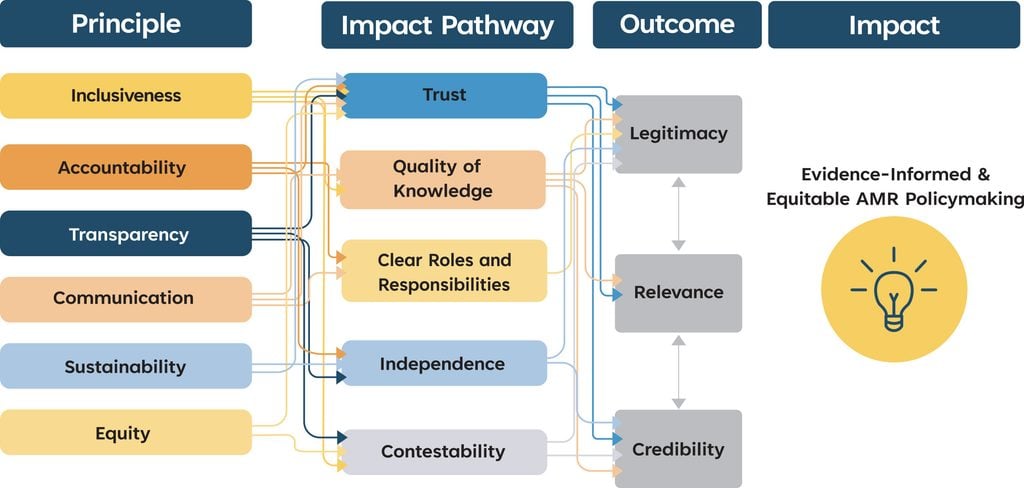
From these lessons, our team developed a framework that provides a checklist of key principles and processes that influence the effectiveness of IPEA and other scientific panels, but each panel remains unique, and design decisions should consider individual, social, and political contexts.
 Previous