

Antimicrobial resistance (AMR) continues to place its heaviest burden on low- and middle-income countries (LMICs). Although the United Nations has urged all countries to develop and implement national action plans (NAPs), progress has been slow as governments navigate limited resources and competing health and development priorities.
A new collaboration between the Global Strategy Lab (GSL)’s AMR Policy Accelerator and the International Centre for Antimicrobial Resistance Solutions (ICARS) aims to help accelerate that progress. The two organizations have signed an agreement that strengthens their shared commitment to supporting LMICs in developing and implementing evidence-informed AMR policies grounded in a One Health approach.
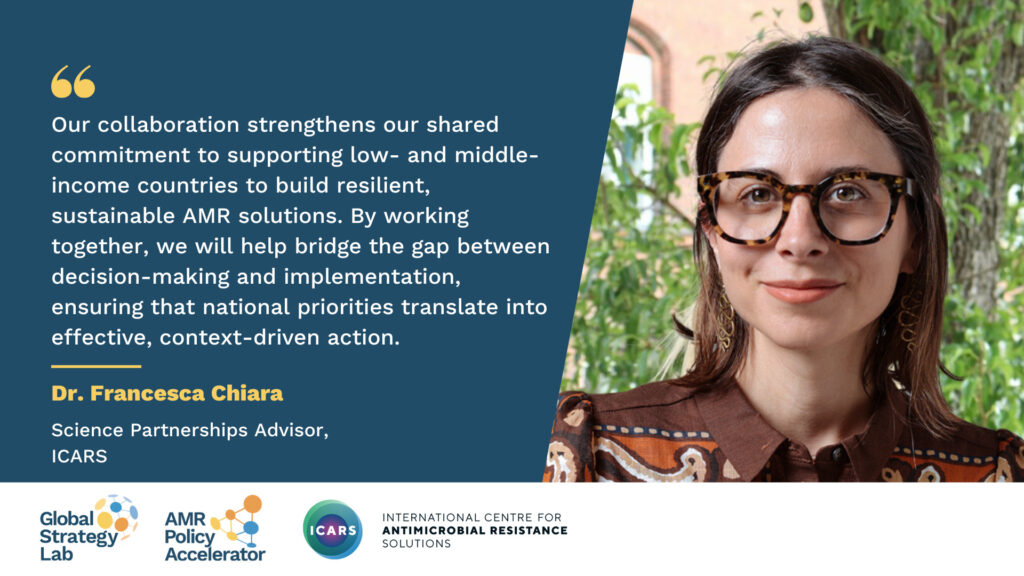
“Our collaboration strengthens our shared commitment to supporting low- and middle-income countries to build resilient, sustainable AMR solutions. By working together, we will help bridge the gap between decision-making and implementation, ensuring that national priorities translate into effective, context-driven action.” – Dr. Francesca Chiara, Science Partnerships Advisor, ICARS
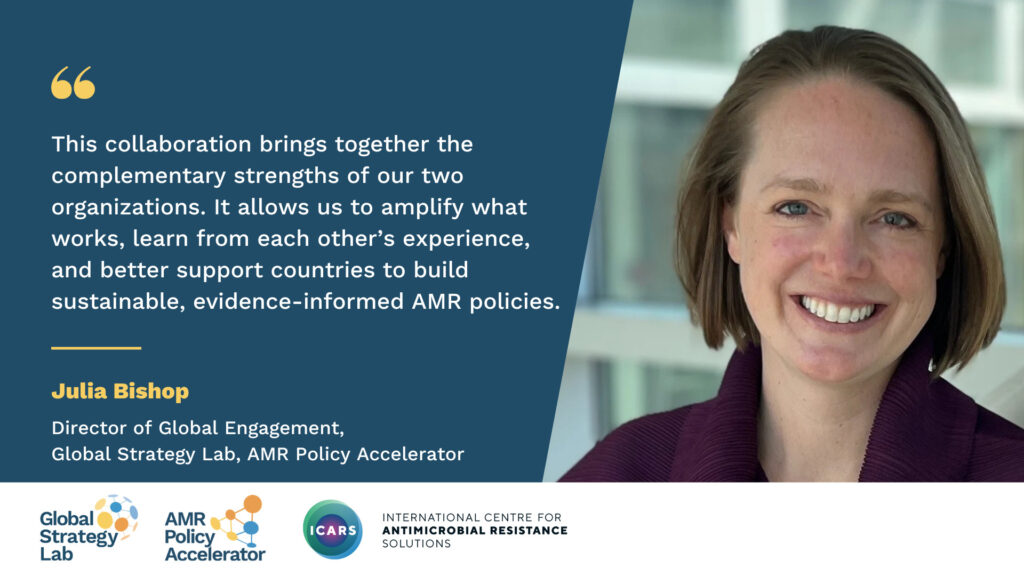
“This collaboration brings together the complementary strengths of our two organizations. It allows us to amplify what works, learn from each other’s experience, and better support countries to build sustainable, evidence-informed AMR policies.” – Julia Bishop, Director of Global Engagement, Global Strategy Lab, AMR Policy Accelerator
ICARS, founded in 2018, has built a strong track record of partnering with LMICs to co-develop, fund, and implement practical, context-specific solutions to local AMR challenges. GSL’s AMR Policy Accelerator, established in 2022, provides complementary support through research for evidence-informed policymaking and through the Smart Choice Process, a systematic, transparent method that helps countries prioritize AMR interventions in their NAPs.
Both organizations recognize that sustainable AMR responses require coordinated action across human, animal, and environmental health sectors. Through regular knowledge exchange, shared tools, and coordinated support, this new partnership aims to strengthen each organization’s impact – helping countries advance effective AMR policies and promote responsible antimicrobial use.
 Previous