

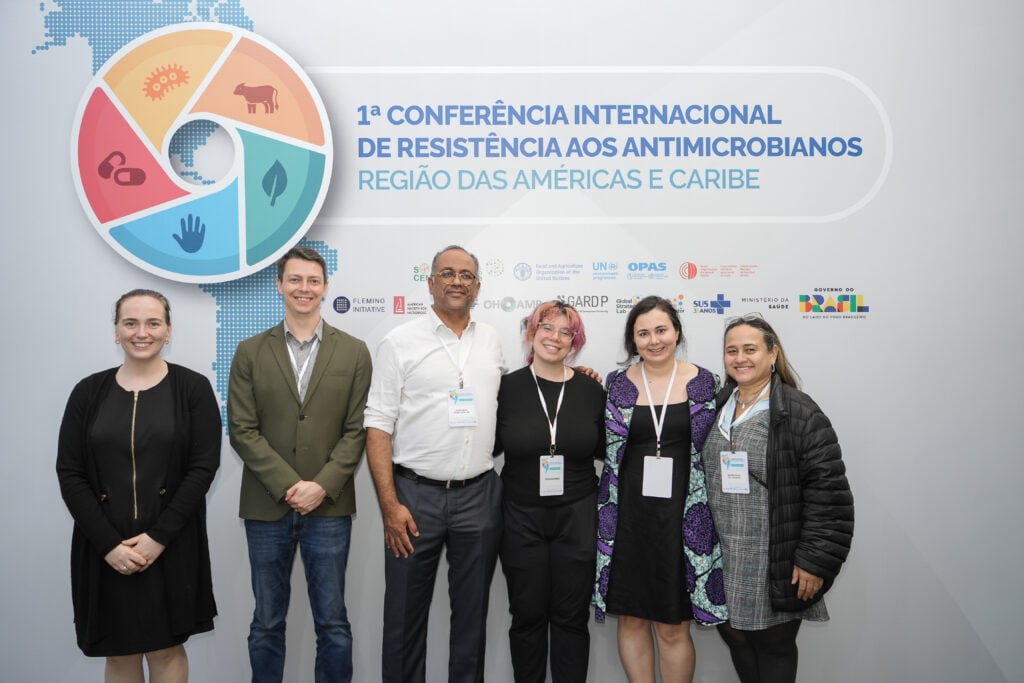
From March 23 to 27, in Brasília, Brazil, leaders, researchers, policymakers, and technical experts from across Latin America and the Caribbean came together for the 1st Americas Regional Meeting on Antimicrobial Resistance. Hosted by Brazil’s Ministério da Saúde, in partnership with the Global Strategy Lab (GSL) and other national, regional, and international organizations, the meeting created a space for regional dialogue and collaboration under a One Health approach to accelerate action on one of the most pressing global health challenges of our time: antimicrobial resistance (AMR).
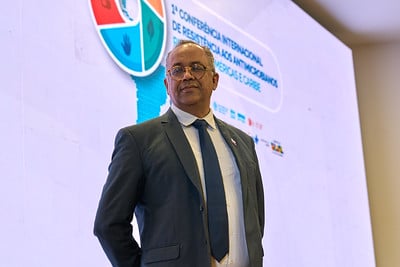
“This was an intense and valuable week of knowledge exchange and dialogue, bringing countries together to reflect on how to strengthen the implementation of national action plans on antimicrobial resistance.”
— André Abreu, Brazil’s Ministério da Saúde (translated from Portuguese) | shared via LinkedIn
Antimicrobial resistance continues to threaten human, animal, and environmental health, with impacts that extend across countries and systems. In the Americas, this burden is significant. According to a 2023 study published in The Lancet Regional Health – Americas, bacterial AMR was estimated to have caused approximately 141,000 deaths in 2019, with a total of 569,000 deaths associated with resistant infections across the region.
At the same time, the region is one of the world’s largest producers of food, facing the dual challenge of reducing antimicrobial use while sustaining growth in livestock, aquaculture, and agriculture sectors.
At a critical moment for regional and global AMR action, the need for coordinated, multisectoral responses that are grounded in evidence and responsive to regional realities is more urgent than ever. This is why this meeting brought together diverse participants to align priorities, share experiences, and identify practical pathways forward ahead of upcoming political milestones, such as the 5th High-Level Ministerial Conference on AMR to be held in June 2026.
Key themes shaping regional action
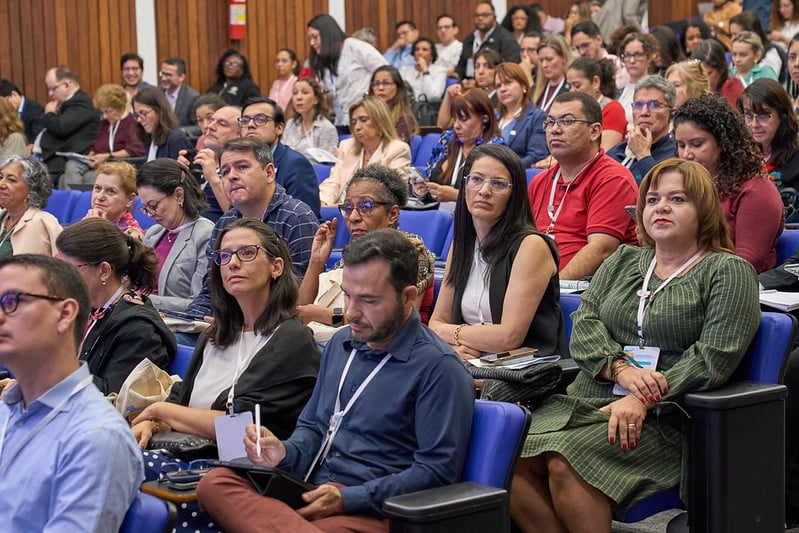
Throughout the week, participants explored shared challenges and opportunities for advancing AMR policy and implementation across the region.
Discussions emphasized the importance of strengthening governance and regional coordination, including aligning national action plans with global commitments and enhancing multisectoral collaboration across human, animal, and environmental health systems.
A central focus was the need for sustainable financing and implementation, with participants identifying persistent funding gaps and exploring strategies to support the long-term delivery of national AMR action plans, particularly in low- and middle-income country contexts.
Participants also examined access, stewardship, and surveillance, highlighting the need to improve access to quality-assured antimicrobials and diagnostics, strengthen integrated surveillance systems, and promote responsible use across sectors.
The meeting further explored prevention and One Health integration, including infection prevention and control, vaccination, and the role of agrifood systems and environmental factors in shaping AMR risks and responses.
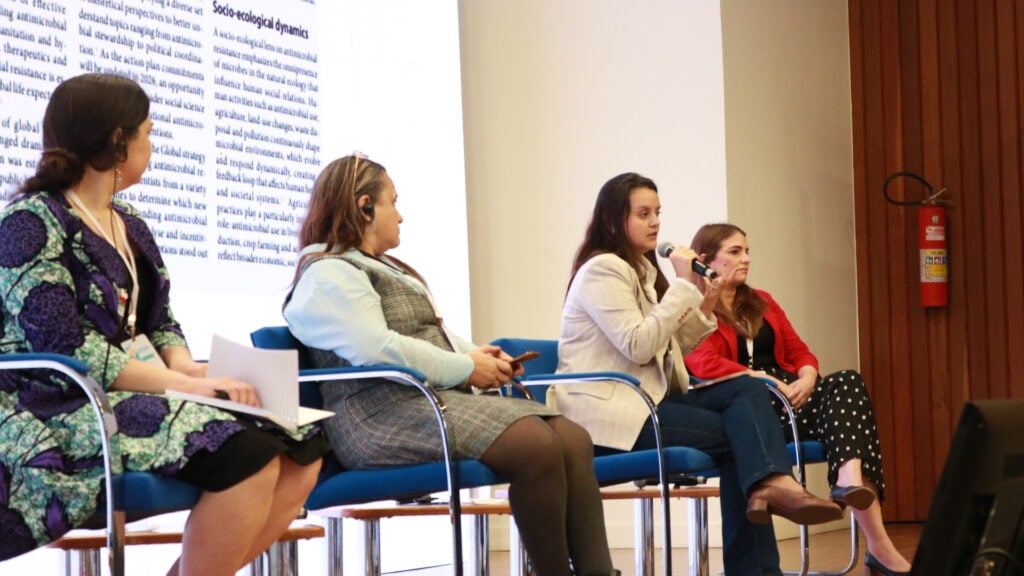
GSL Director Mathieu Poirier moderated a panel on the important role of the social sciences in addressing AMR. The session brought together a diverse group of speakers, including Lauren Wallace, Beatriz Elena Marín Ochoa, Samantha Serrano, Juliana Corrêa, Nathalie El Omeiri, and Gustavo Corrêa da Matta, offering perspectives on how social and behavioural factors shape AMR responses.
From dialogue to action: co-developing a regional roadmap
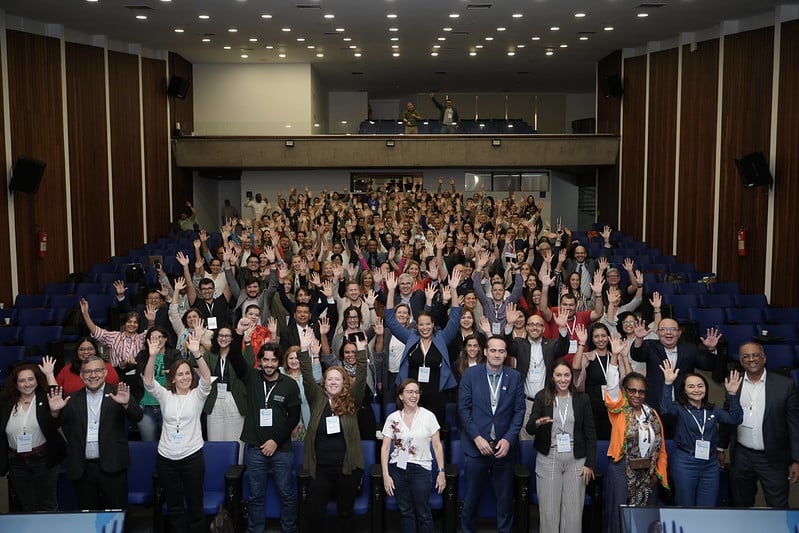
A central outcome of the meeting was the co-development of inputs toward a regional AMR roadmap for 2026–2030. Participants identified shared priorities, explored coordination mechanisms, and began outlining actionable steps to support implementation across countries and sectors.
Linking capacity building to policy action
The Regional Meeting was preceded by a two-day AMR Policymaking Course led by the Global Strategy Lab. This course brought together participants across One Health sectors through a workshop that offers an interdisciplinary program designed to equip policymakers and practitioners with the tools to navigate the policymaking process, integrate diverse evidence, and address AMR challenges with equity, ethics, and political insight at national and global levels.
This foundation helped support more informed and collaborative engagement during the Regional Meeting discussions.
Looking ahead
The next step will be the drafting and publication of the regional AMR roadmap, which will continue in the coming months. The roadmap aims to support countries in implementing shared priorities, country-led actions, and mechanisms for ongoing collaboration on AMR and the sustainable implementation of One Health AMR National Action Plans.
Together, these efforts reflect growing momentum across the Americas to address antimicrobial resistance, not as isolated national challenges, but as a shared regional priority requiring collective action.
Acknowledgements
The Global Strategy Lab extends its appreciation to the organizers and partners who made this convening possible. The meeting was hosted by Brazil’s Ministério da Saúde, in collaboration with national partners including the Ministério da Agricultura e Pecuária, ANVISA, and Embrapa.
We also acknowledge the contributions of the Quadripartite organizations — the World Health Organization (WHO), the Food and Agriculture Organization of the United Nations (FAO), the World Organisation for Animal Health (WOAH), and the United Nations Environment Programme (UNEP) — as well as the Pan American Health Organization (PAHO), the Quadripartite Joint Secretariat (QJS), and the AMR Multi-Stakeholder Partnership Platform (MSPP).
Additional partners included the International Centre for Antimicrobial Resistance Solutions (ICARS), the Global Antibiotic Research and Development Partnership (GARDP), CARB-X, the Fleming Initiative, the Inter-American Development Bank (IDB), the American Society for Microbiology (ASM), the South Centre, and the United Nations Foundation.
 Previous